Blackwork Embroidered Pocket
10Sep2026
Well this blog post is a little late. I wrote it weeks ago and I’m only just now getting around to actually posting it. Anyway, I’m back from Pennsic 53, and I have paneled and received competency in couching/laidwork and stumpwork for my flowers! I am competent in 3 out of 12 categories, which is incredibly exciting as I move forward on my embroidery learning journey. I caught a head cold after Pennsic, and while recovering I began to embroider a pocket.
I decided to try my hand at blackwork embroidery, which is a 16th century embroidery technique. It’s most recognizable from the Tudor Era in England, seen on cuffs, collars, and various other undergarments. It’s a monochromatic embroidery style, usually done in black, but also seen in green and red. Typically there are geometric patterns, but some styles are more free flowing. Since the decorative stitching was in areas where you would tend to see both the “wrong” and “right” side of the fabric, the main stitch for blackwork is a reversible stitch that looks the same on the front and back. This stitch is called the Holbein Stitch, named for the painter Hans Holbein. His paintings are known for showing a wide variety of blackwork embroidery, and are a wonderful reference for historical motifs!
The Holbein stitch, also known as a double running stitch is super easy to do. You put down a running stitch, and then go back over your lines to fill in the gaps.
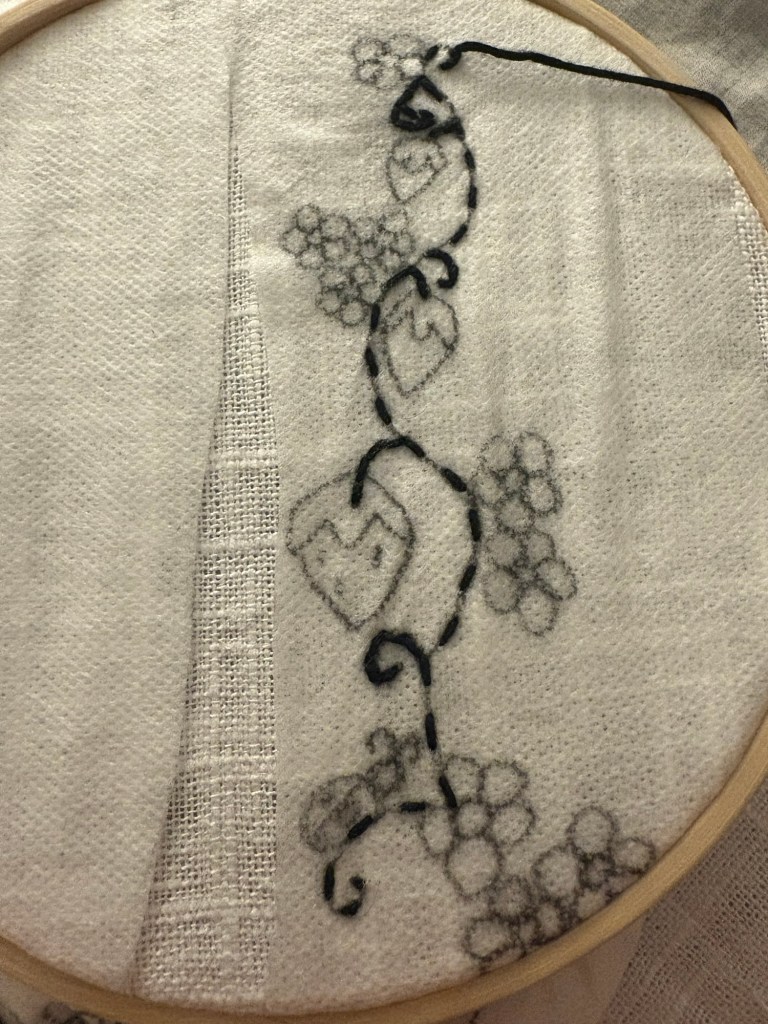
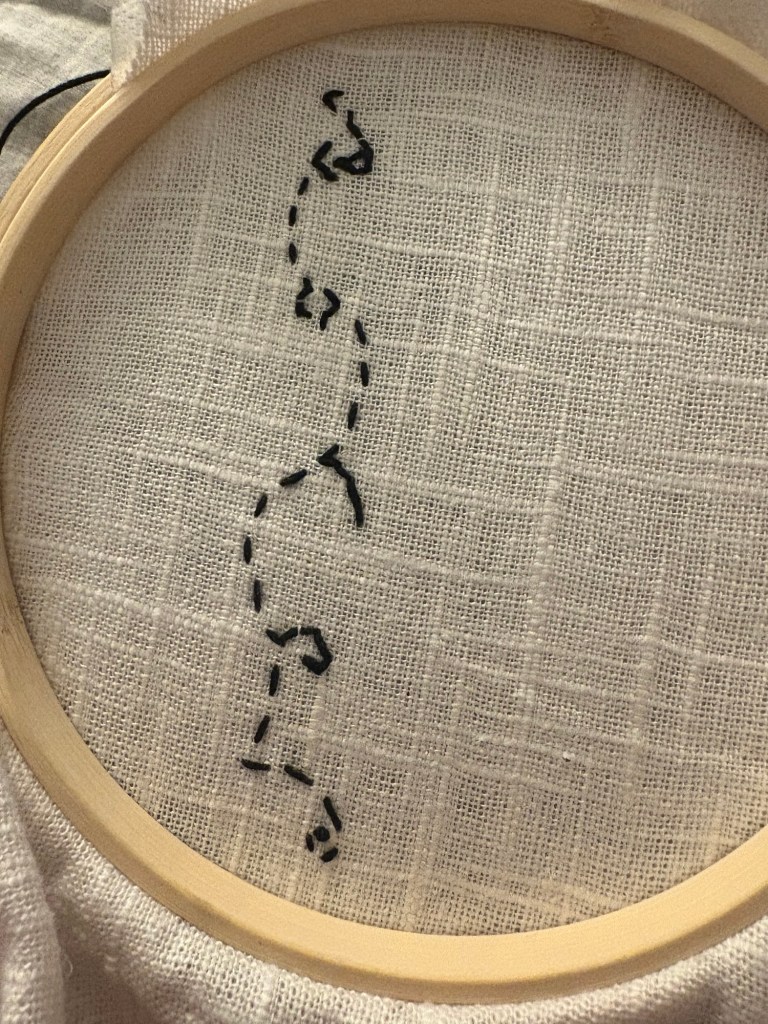
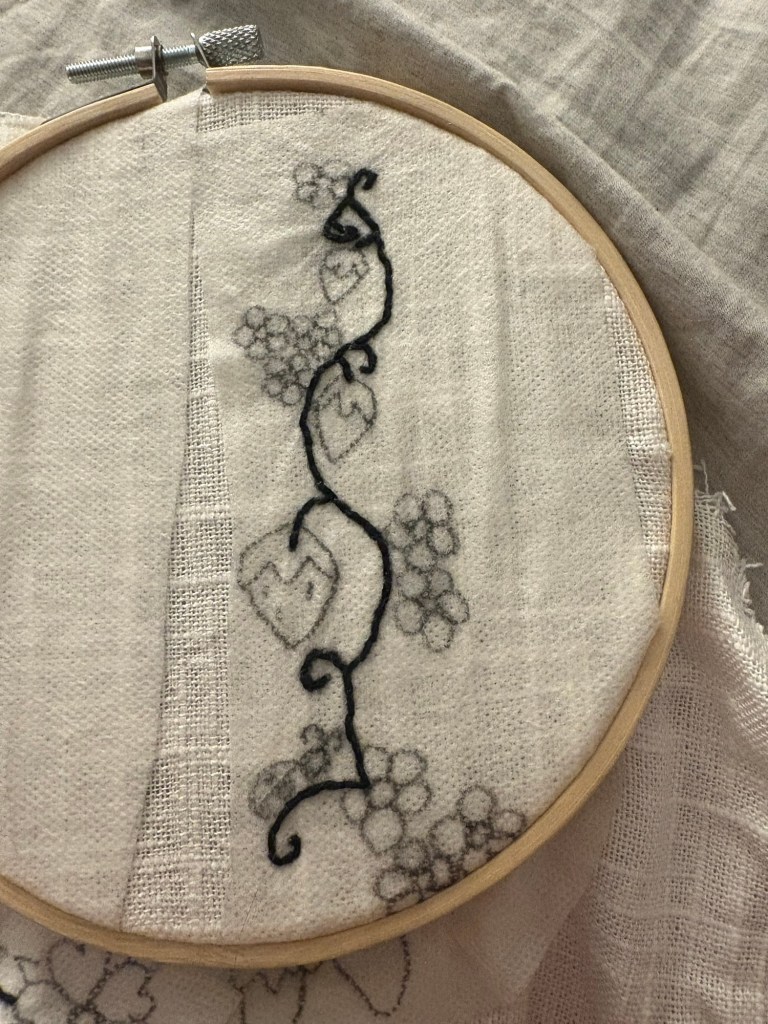
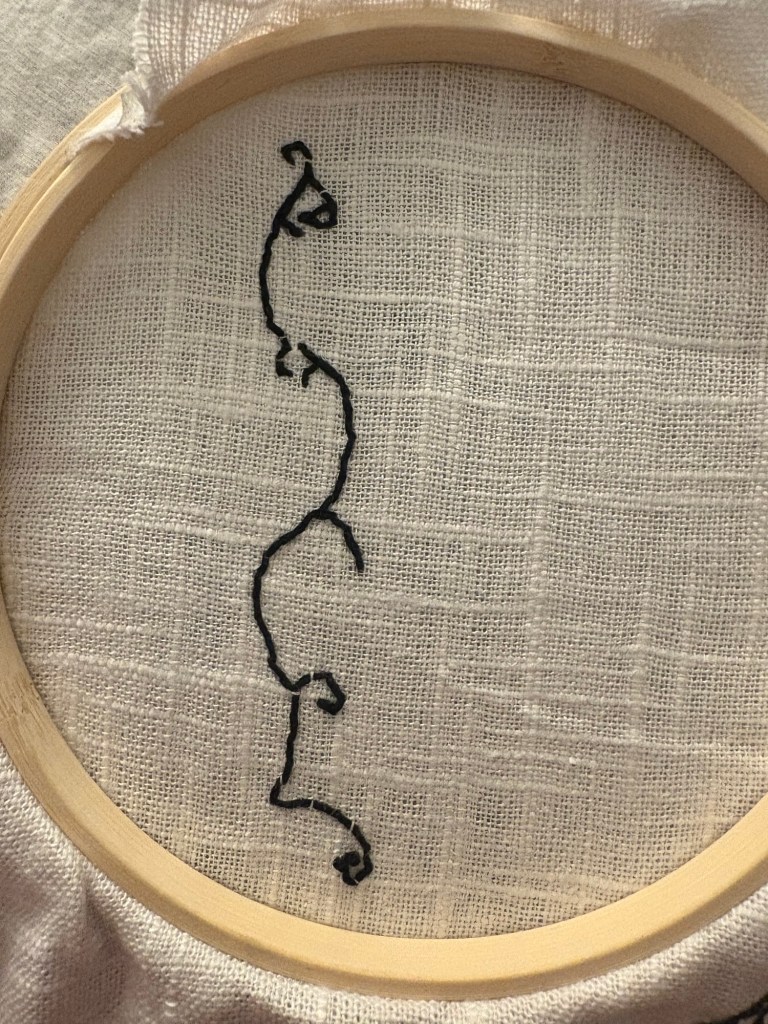
The Holbein Stitch tends to be the outline, and the fill stitches are repeating geometric patterns. Blackwork as we know it modernly is easier to do as a counted embroidery form on even weave fabric, but it’s not necessary. Historically speaking, blackwork was more commonly an uncounted form of embroidery.
Anyway, here is my finished pocket! This project went REALLY quickly, which is a nice change of pace from the stumpwork flowers. I think I spent around 8hrs total on it.
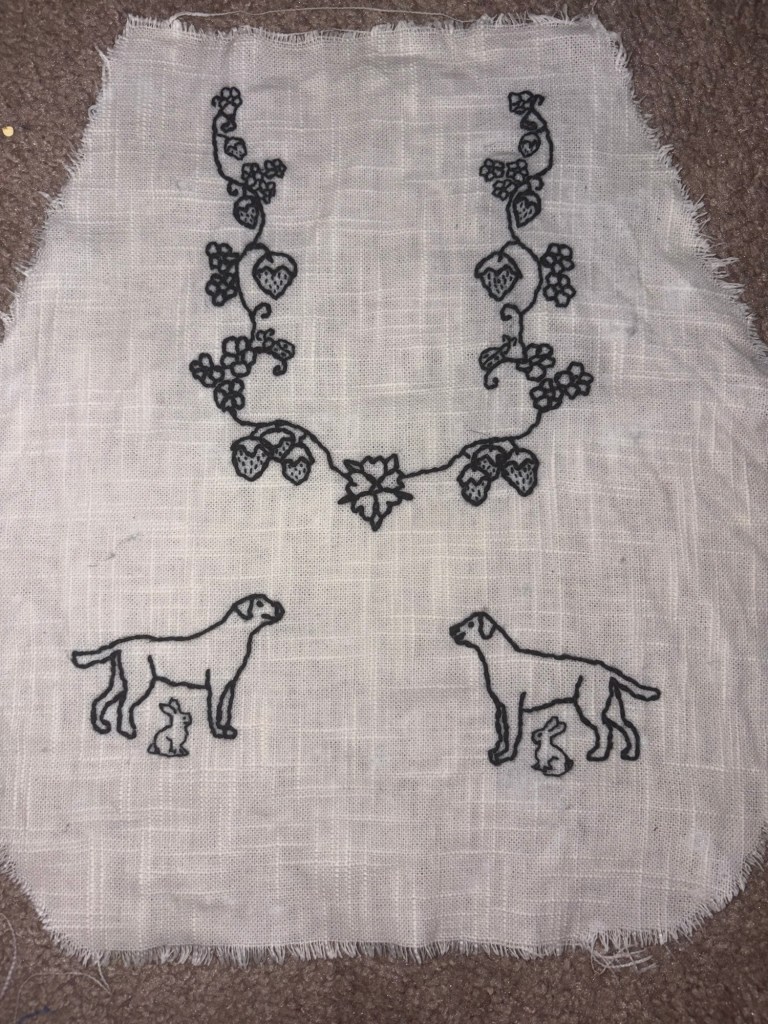
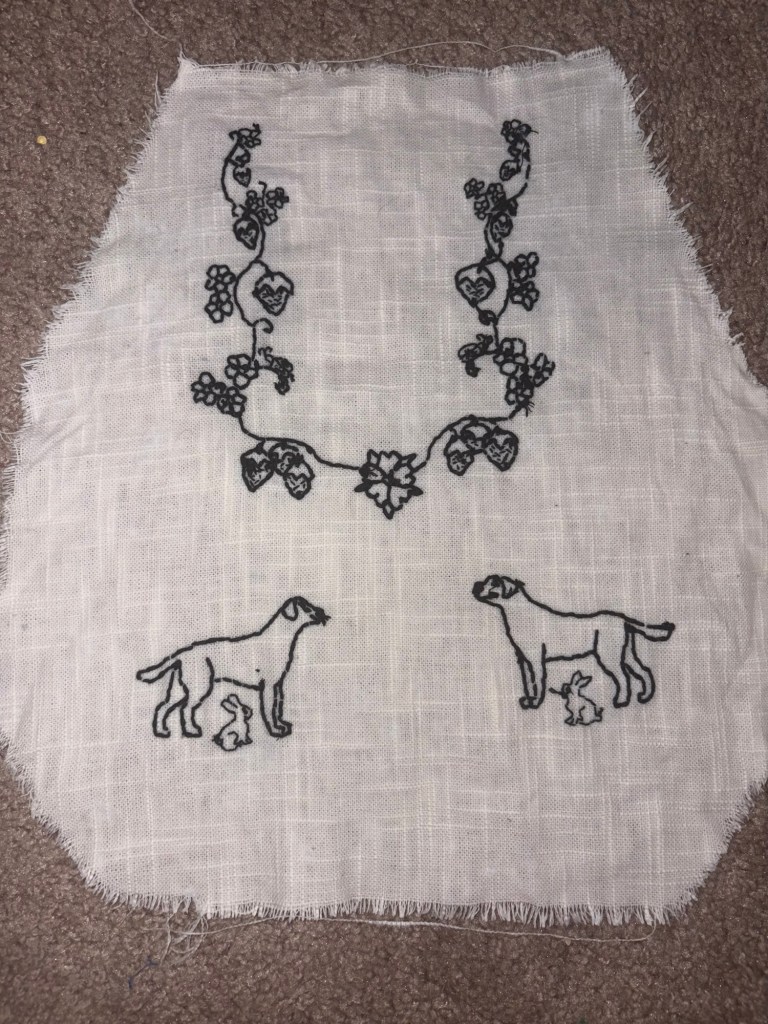
You can really see in the photos just how similar the front and back are. The double running stitch has quickly become my second favorite stitch to use, second only to my beloved split stitch! Though I enjoyed blackwork, I do find it to be kind of boring. Monochrome just isn’t my preferred style, and I think a lot of the motifs would pop more if there was color. I think one day I will do a coordinating pocket using the same stitches but adding color, just to satisfy my creativity.
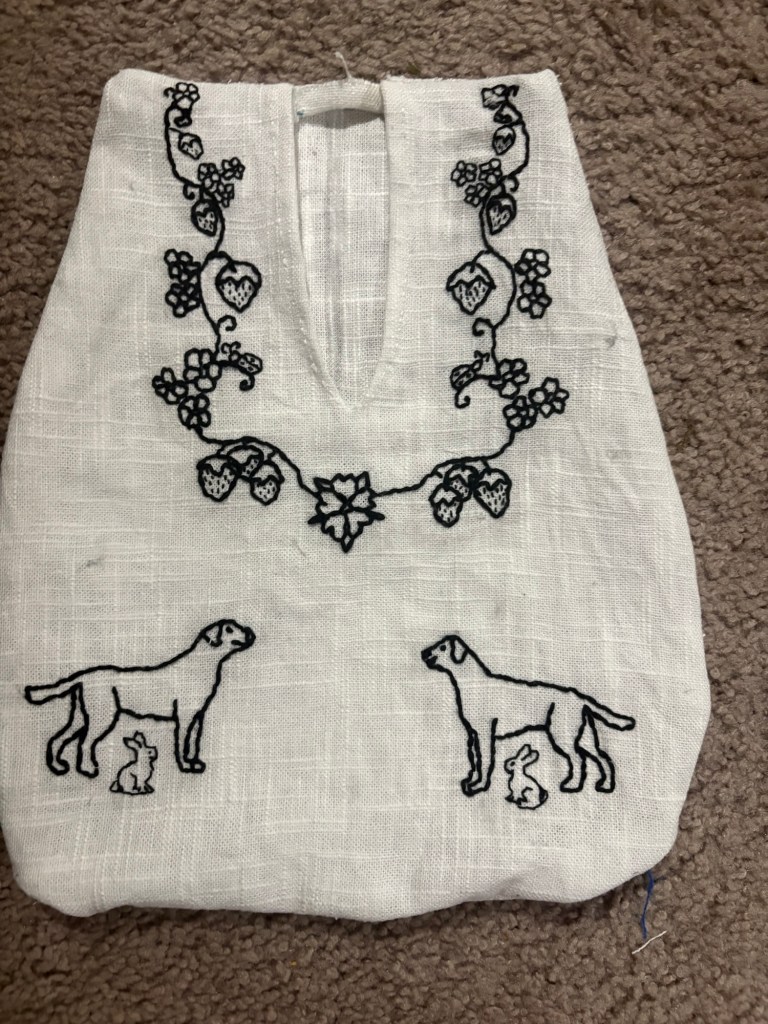
I did french seams for this pocket, just to make sure that it’s sturdy and lasts a long time. It will see a lot of use, and I don’t want my pocket ripping out!

